
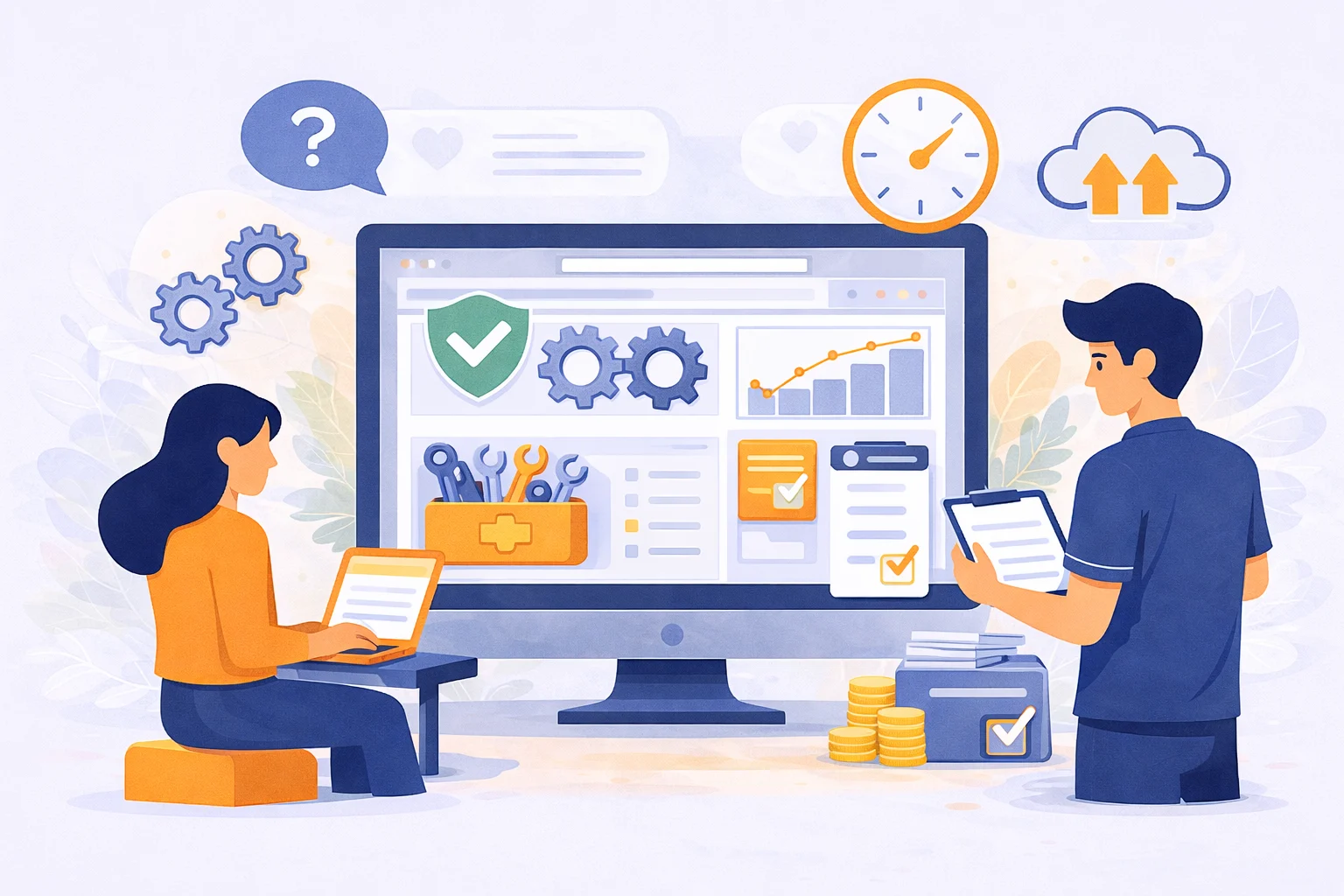
What Does “Manage My Website” Actually Mean?
When someone searches for manage my website, they are usually not looking for technical terms. They want their website to work properly without constant problems. Managing a website means taking responsibility for everything that keeps it running.
This includes content, performance, security, and stability. A website is not something you build once and forget. It needs attention, just like any other part of your business. If your website is not managed properly, small issues can grow into serious problems.
Why Managing Your Website Matters for Your Business
Your website is often the first place people interact with your business. If it looks broken or loads slowly, trust disappears immediately. Search engines also evaluate how well your website is maintained. Websites that are frequently updated, secure, and fast tend to perform better in search results.
When you manage your website consistently, you:
- Build trust with visitors
- Reduce downtime and errors
- Improve user experience
- Protect your rankings
Ignoring website management often leads to lost traffic and missed opportunities.
Common Problems When You Manage My Website Without Help
Many business owners start by managing everything themselves.
At first, it feels simple. Over time, problems appear. Your website may suddenly go offline without warning. Updates might break important features. Pages can start loading slower than before. Contact forms may stop sending messages. These issues usually happen because website management is done inconsistently. If this sounds familiar, you might want to read
Your Website Down Suddenly? Common Reasons You Should Know to understand what causes unexpected website downtime.
Core Tasks to Manage My Website Properly
Managing your website is not about doing everything at once. It is about handling the right tasks at the right time.
Keeping Your Website Updated
Your website runs on a system that needs regular updates. These updates fix bugs, improve performance, and protect your site from security threats. When updates are delayed for too long, your website becomes unstable.
This is one of the most common reasons websites break unexpectedly.
Creating Regular Website Backups
Backups are your safety net.
If something goes wrong, a backup allows you to restore your website quickly. Without backups, even a small mistake can lead to permanent data loss. Many business owners only realize the importance of backups after their website crashes.
Protecting Your Website From Security Threats
Security is not only for large companies. Small business websites are often targeted because they are easier to attack. Managing your website means monitoring for malware, securing login access, and preventing unauthorized changes.
A secure website protects both your business and your visitors.
Maintaining Website Speed and Performance
Website performance affects how people interact with your site. Slow pages increase bounce rates and reduce conversions. When you manage your website properly, you regularly check loading speed, mobile usability, and broken pages.
This helps keep users engaged and supports your SEO efforts.
How Much Time Does It Take to Manage My Website?
Website management is an ongoing process. It does not happen once a month or only when something breaks. You need to spend time monitoring, updating, and fixing small issues before they become serious. For busy business owners, this can quickly become overwhelming.
This is why many people eventually look for professional website management support.
Manage My Website Myself or Use Professional Help?
Managing your website on your own gives you full control. But it also comes with risks.
Professional website management reduces errors, improves stability, and saves time. It allows you to focus on growing your business instead of fixing technical problems. If managing your website feels stressful or confusing, getting help is often the smarter choice.
Final Thoughts on Managing Your Website
Searching for manage my website usually means you want clarity, not complexity. A well-managed website supports your business instead of slowing it down. With the right approach, website management becomes predictable and manageable. Without it, your website becomes a constant source of stress.


