
Website speed and conversion rate aren’t just numbers on a report they’re about how people experience your site. No one likes waiting, especially online. If your page takes too long to load, visitors click away and never see what you have to offer. But when your site loads fast, it feels smooth and effortless, giving people more reasons to stay, explore, and buy.
Now, imagine this: a customer clicks on your product page. They’re ready to buy. But instead of loading instantly, your site keeps spinning… 3 seconds, 4 seconds, 5 seconds.
What do you think happens next?
Most people leave. They don’t wait. They close the tab and find another store that’s faster.
That’s exactly what one of our clients experienced before we stepped in.
The Problem with Website Speed and Conversion Rate
The biggest issue with website speed and conversion rate is that many businesses underestimate the impact. They invest in design, ads, or content, but forget that if a site loads slowly, visitors may never even see those efforts.
Here’s what usually happens:
- Pages take more than 3 seconds to load → users lose patience.
- Slow speed breaks trust → people assume the site isn’t reliable.
- High bounce rates → fewer chances to convert visitors into buyers.
In short, a slow website silently kills conversions, no matter how great your products or services are.
Traffic was coming in, but sales weren’t following.
The Solution to Improve Website Speed and Conversion Rate
We didn’t rebuild the whole site. Instead, we focused on small but powerful changes:
- Image Optimization
Large product images were slowing everything down. We resized and compressed them without losing quality. - Caching Setup
Returning visitors were downloading the same data over and over. With caching, pages loaded instantly on repeat visits. - Hosting Upgrade
Their old server was cheap, but also slow. We moved them to a faster hosting plan. - Lazy Loading
Instead of loading every image at once, the site only loaded images as visitors scrolled.
The Result of Improving Website Speed and Conversion Rate
After optimizing the site, the difference was clear. The improvements in website speed and conversion rate showed up in measurable ways:
- Page load time dropped from 4+ seconds to under 2 seconds
- Bounce rate decreased significantly as users stayed longer
- Engagement levels improved with more pages viewed per session
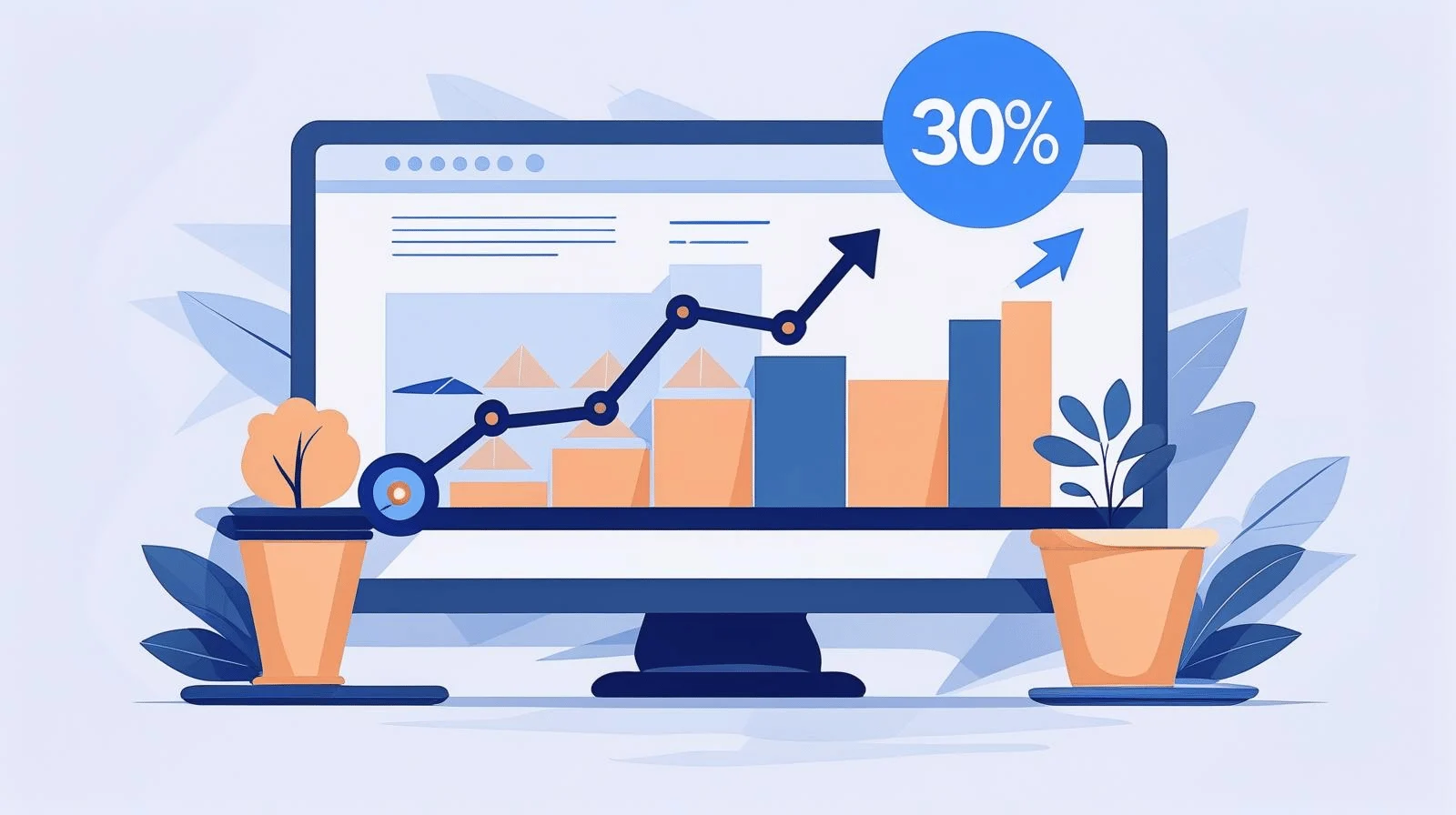
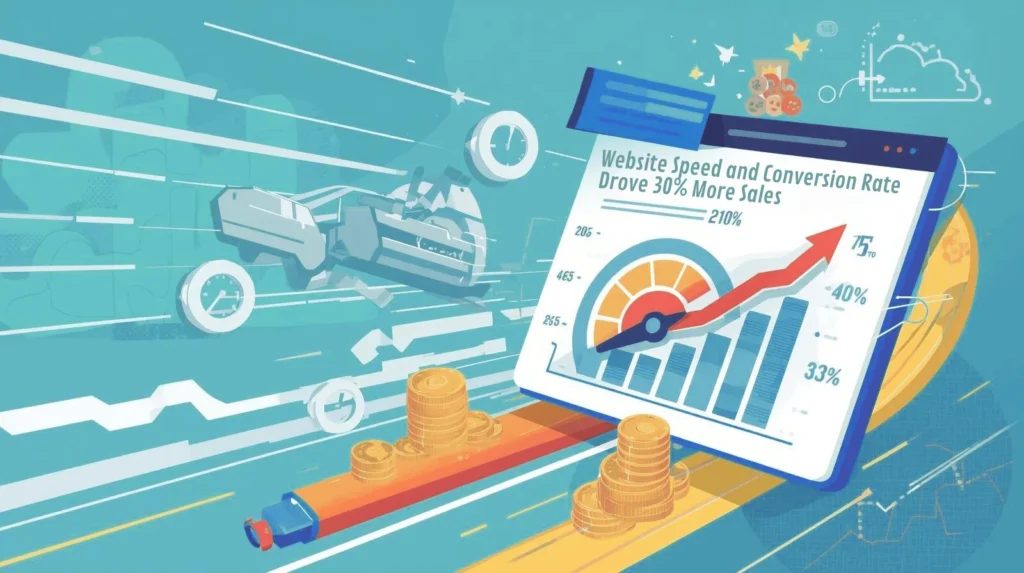
- Conversions increased by 30% compared to before
- More sales came in without additional ad spend
These results proved that a faster website not only creates a smoother experience but also directly boosts sales and customer trust.
Why Website Speed and Conversion Rate Improvements Work
Improving website speed and conversion rate matters because:
- Visitors don’t want to wait – slow-loading pages frustrate users and increase bounce rates
- A fast site builds trust – people feel more confident buying from a site that loads quickly
- Search engines favor speed – Google ranks faster sites higher, bringing more traffic and potential conversions
In short, faster websites directly improve user experience and sales, showing that speed really is money.
What You Can Learn About Website Speed and Conversion Rate
If your site feels slow, it’s a sign to take action. Improving website speed and conversion rate doesn’t have to be complicated start with small, practical steps:
- Check your website with Google PageSpeed Insights to identify slow-loading elements
- Optimize images by reducing file sizes before uploading
- Talk to your hosting provider about faster server options
- Enable lazy loading for images to improve page load times
Even small improvements can lead to big results in conversions. At ManageMySite, we’ve seen websites achieve noticeable growth and higher sales just by focusing on speed.
Take Action on Website Speed and Conversion Rate
Improving website speed and conversion rate isn’t just a technical task it’s a way to give your visitors a better experience and boost your sales. Small changes can make a big difference, from faster loading pages to smoother navigation.
If you’re ready to see real results, ManageMySite can help. Our team specializes in optimizing website speed, improving conversions, and making sure your site performs at its best. Book a free consultation today and start turning faster speed into more sales.


